Minimal Impact of Hurricanes Helene and Milton on Cat Bonds and ILS Mutual Funds
Hurricane Helene developed on September 22, 2024 as a low-pressure system in the western Caribbean. Strengthening as it approached the Yucatán Peninsula, it reached tropical storm status on September 24 and intensified into a Category 4 hurricane by September 26 while moving through the Gulf of Mexico. Helene made landfall near Perry, Florida (see Figure 1), with winds of 140 mph, causing severe storm surge in Tampa Bay - the highest in over 80 years, marking it as the strongest storm to hit Florida's Big Bend since 1851.
Hurricane Helene
Hurricane Helene developed on September 22, 2024 as a low-pressure system in the western Caribbean. Strengthening as it approached the Yucatán Peninsula, it reached tropical storm status on September 24 and intensified into a Category 4 hurricane by September 26 while moving through the Gulf of Mexico. Helene made landfall near Perry, Florida (see Figure 1), with winds of 140 mph, causing severe storm surge in Tampa Bay - the highest in over 80 years, marking it as the strongest storm to hit Florida's Big Bend since 1851.
As Helene advanced inland, its impacts extended across Georgia and the southeastern U.S. On September 27, Helene reached North Carolina, bringing record-breaking rainfall of over 30 inches in some areas, particularly in the mountainous regions. Flooded rivers and streams resulted in extreme 1,000-year flood events, with landslides and strong winds further complicating recovery efforts. Classified as one of the deadliest U.S. storms of the 21st century, Helene caused nearly 100 deaths in North Carolina alone, with severe flooding resulting in long-lasting impacts across affected states.
Hurricane Helene made landfall in the less populated areas of Florida's Big Bend, moving eastward away from Tallahassee, which appears to have diminished the potential overall impact on the insurance industry. Although the storm caused considerable damage and significant storm surge, initial industry loss estimates (see Figure 2) indicate very minimal to no loss to cat bonds and ILS mutual funds.
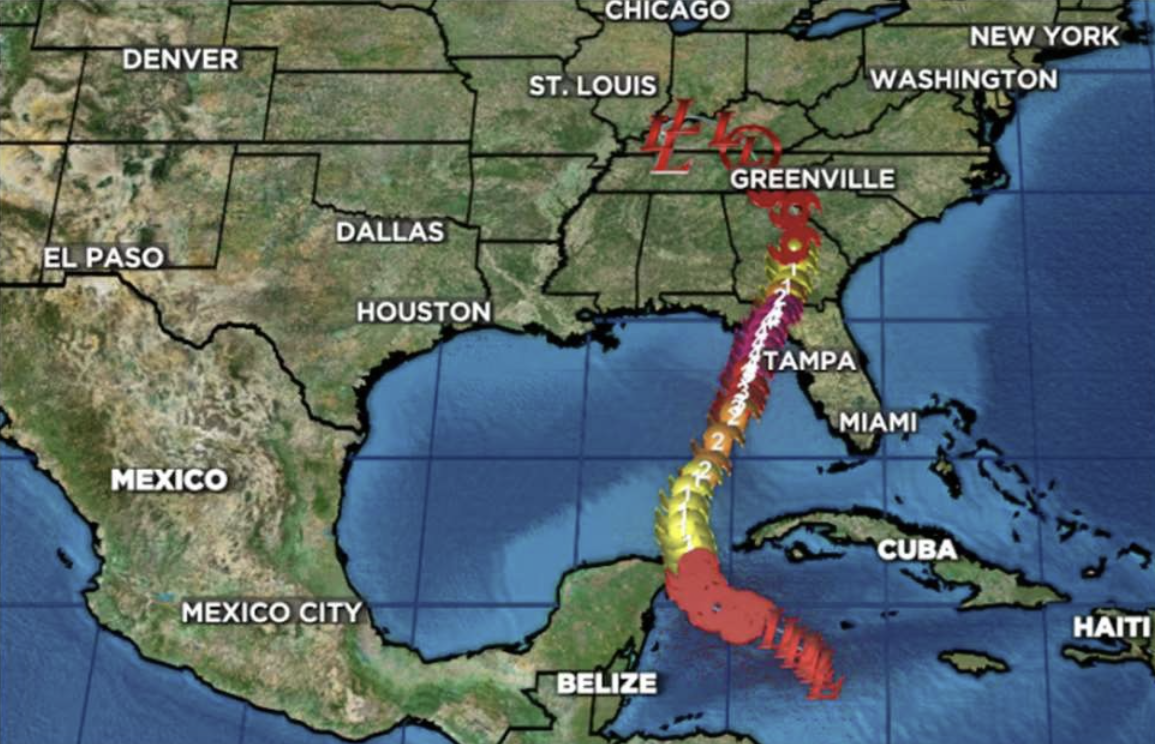
Figure 1: Hurricane Helene track. Source – FOX News
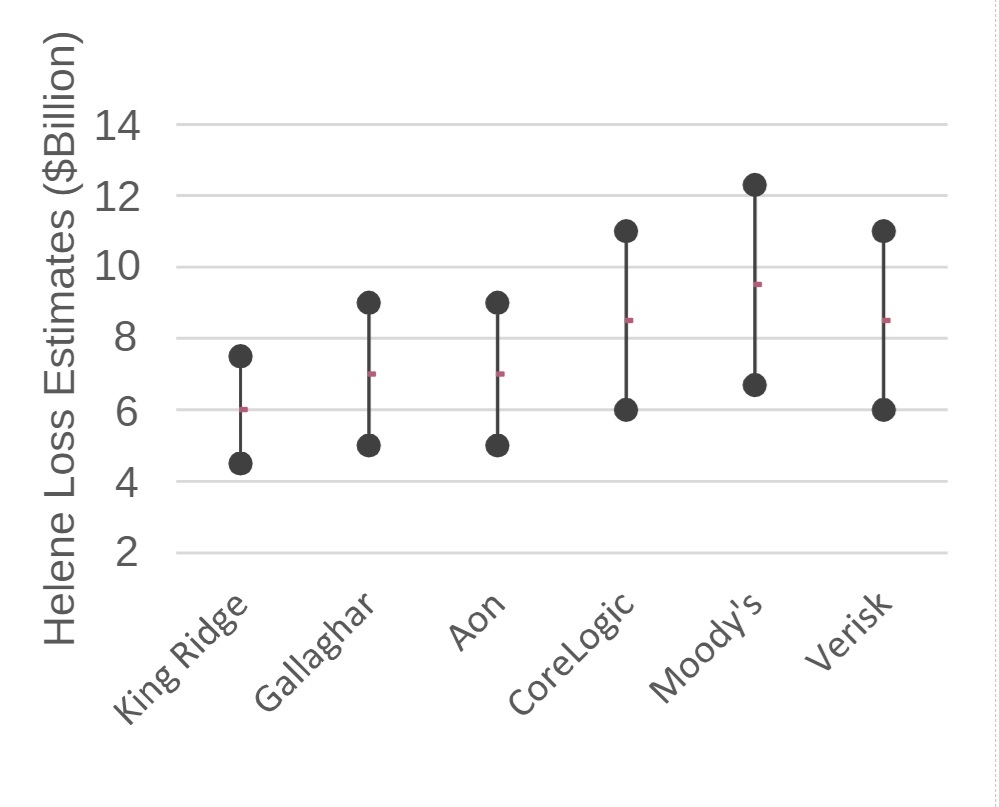
Figure 2: Helene loss estimates from multiple sources. King Ridge indicates our internally developed loss estimate
| Loss estimates for Hurricane Helene ranged from $5 billion to $12 billion, with an average estimate of $7.5 billion. The hurricane had minimal to no impact on catastrophe bonds and ILS mutual funds. |
Hurricane Milton
Hurricane Milton formed on October 5, 2024 as a tropical disturbance in the western Caribbean, consolidating in the Bay of Campeche. By October 7, it had rapidly intensified from a tropical storm to a Category 5 hurricane, reaching 160 mph winds. Forecast models indicated uncertainty about Milton’s track, with a high risk of major landfall impacts on Florida’s west coast near Tampa Bay, potentially causing up to $100 billion in damages. Weather models began indicating a slight shift south of Tampa, but Tampa Bay remained under high risk due to the storm’s potential size and strength.
By October 8, Milton had reached peak intensity with sustained winds of 180 mph and a central pressure of 897 mb, becoming the fifth-most intense Atlantic hurricane on record. After weakening to a Category 4 following an eyewall replacement cycle, it was expected to bring catastrophic storm surges between 10 to 15 feet to the Tampa Bay region. Despite a slight southward wobble caused by instabilities within the complex dynamics of its eyewall, Milton retained its trajectory toward south of Tampa with some signs of expanding in size, raising concerns for widespread wind and storm surge impacts.
During the last 12 hours leading up to landfall, Milton encountered an area with increased vertical wind shear, reducing the storm's intensity just before landfall. On the evening of October 9, Hurricane Milton made landfall as a Category 3 in Siesta Key, Sarasota County, with 120 mph sustained winds (see Figure 3).
Figure 3: Hurricane Milton track. Source- NHC
The storm's approach brought widespread impacts across Florida, with hurricane-force winds reaching inland to central Florida, including the I-4 corridor. Although it caused extensive wind damage, storm surge in Tampa Bay was less severe than anticipated due to the southward landfall position, even resulting in a reverse surge that temporarily pulled water out of the bay. Areas south, such as Naples, reported storm surges around five feet. The storm’s relatively fast movement helped to limit flooding impacts in some regions. As Milton moved off the east coast near Daytona Beach, it had transitioned to an extratropical cyclone, reducing its intensity. Its trajectory and speed helped avoid worst-case scenarios for the insurance industry, sparing Tampa Bay from catastrophic flooding. Various sources released a broad range of loss estimates for Milton (see Figure 4).
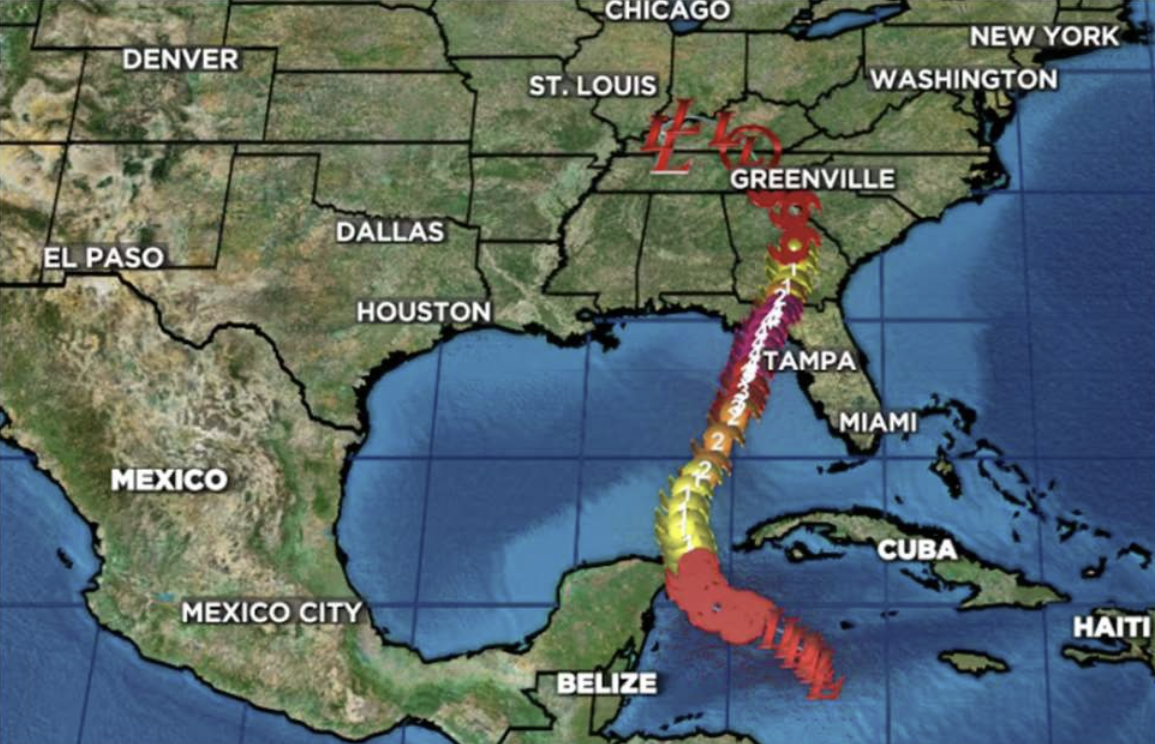
Figure 4: Hurricane Milton loss estimates from multiple sources. King Ridge indicates our internally developed loss estimate
| Loss estimates for Hurricane Milton varied significantly, ranging from $22 billion to $60 billion, with an average estimate of $37 billion. |
Milton's Impact on Cat Bonds
Following Hurricane Milton's landfall in Florida, the Swiss Re Global Cat Bond Total Return Index, which tracks the catastrophe bond market, initially declined by -1.34%. However, as the storm's effects were better understood, the market partially rebounded, reducing the decline to -0.30% within a week. By October 25, the Swiss Re Global Index had reached a new all-time high by gaining +0.25% since the storm's landfall (see Figure 5). The Swiss Re US Wind Cat Bond Index, which focuses on U.S. hurricane risk, also rebounded to just -0.50% below pre-Milton levels. As of Oct 25, 2024, both indices reflect strong performance, with gains of +16.13% for the Global Index and +16.34% for the US Wind Index.
The UCITS cat bond fund index, tracking additional catastrophe bond investments, was also close to full recovery, at just -0.1% below pre-Milton levels by mid-October, demonstrating a swift return to baseline and signaling resilience across catastrophe bond investments. The Plenum Cat Bond UCITS Fund Indices, which tracks the group of UCITS catastrophe bond funds, have delivered an average return of 10.77% as of Oct 2024.

Figure 5: Swiss Re Global and US Wind Cat Bond Total Return Index from Oct 2023 to Oct 2024. Source – https://artemis.bm.
The catastrophe bond market's overall yield climbed as positions were repriced in the aftermath of Hurricane Milton, but, similar to other market indices and cat bond fund performances, the hurricane's impact was quickly offset by ongoing positive momentum. At the end of September, the cat bond market yield was at +11.15%. After Milton made landfall on October 9, the yield rose significantly to +11.70% on October 11, marking an increase of just over +6%. As of October 25, the market yield remained at a historically robust +11.18% (see Figure 6).
Although there is still some uncertainty regarding the actual exposure of cat bonds to Hurricane Milton and the realization of any losses will take time, it is evident that the market effectively absorbed the storm's mark-to-market effects in a relatively short timeframe.

Figure 6: Cat Bond Market Yield from Dec 2023 to Oct 2024. Source – https://artemis.bm
Milton’s impact on cat bonds/ILS related mutual funds
In the wake of Hurricane Milton, the net asset values (NAVs) of U.S. mutual funds that invest in catastrophe bonds and insurance-linked securities (ILS) initially declined but have since largely rebounded as new pricing data and loss estimates became available. Initially, asset managers like Stone Ridge Asset Management and Amundi US marked down their NAVs significantly to account for potential storm-related losses.
Stone Ridge's High Yield Reinsurance Risk Premium Fund (ticker-SHRIX) and Reinsurance Risk Premium Interval Fund (SRRIX) saw a reduction of up to -6.92% and -7.67% but has since reduced initial losses to just -1.08% and -1.62%, respectively below pre-hurricane levels by October 18.
Amundi US Pioneer CAT Bond Fund (CBYYX) and Pioneer ILS Interval Fund (XILSX) dropped by -2.94% and -2.36% at its lowest point but recovered to -0.09% and -1.54% down, respectively below pre-hurricane levels by October 18.
The Ambassador US mutual catastrophe bond fund (EMPIX) managed by Embassy Asset Management. was initially marked down by -2.41% as Hurricane Milton approached Florida. By October 18, it remained at -0.87% below pre-Milton level.
These NAV adjustments reveal a general market alignment in response to updated hurricane impact estimates. As more loss reports emerge, further NAV adjustments may follow, although they are likely to be minor as spreads and premiums continue to offset hurricane-related losses. Overall, the rapid market recovery, with declines reversed within a month or less, reflects the ILS sector’s robust performance during this period and highlights the resilience and responsiveness of the asset class in the face of catastrophic events.